The difference between building on the basalt-rich benches near Table Rock versus the alluvial flats along the Boise River is night and day. On the bench, you might hit weathered volcanic rock within a few feet, while downtown or in the North End you could be digging through sandy gravels and silty clays deposited by the river over millennia. An exploratory test pit is the fastest way to see exactly what lies beneath your site in Boise Idaho. We dig down with a backhoe, log the exposed soil profile, and classify each layer according to ASTM D2488. This visual inspection is often the first step before deciding whether you need a geotechnical study for expansive soils or a more detailed borehole program. For shallow foundations, retaining walls, or underground utilities, a test pit gives you immediate answers about groundwater, obstructions, and soil strength. Without it, you are essentially gambling on conditions that vary block by block across the valley.
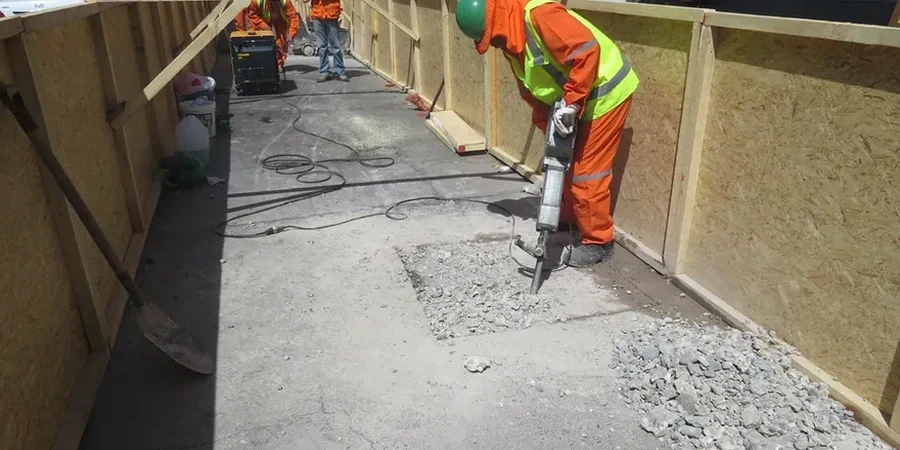
A test pit exposes the actual soil profile in hours, not days — eliminating guesswork for shallow foundations, utilities, and retaining walls in variable alluvial terrain.
Method and coverage
- Visual soil classification per ASTM D2488
- Depth to groundwater and seepage observations
- Undisturbed and disturbed sampling for lab testing
- Photographic record of each layer
Regional considerations
Boise sits in a semi-arid climate with hot dry summers and cold winters, but the real challenge for test pit work comes from the shallow water table along the river corridor. In the spring, when snowmelt feeds the Boise River, groundwater can rise several feet. If your exploratory test pit hits water at 6 ft in March, but you build in August when the water table drops to 12 ft, the foundation design must account for that seasonal swing. We always note the date and recent precipitation in our logs so your geotechnical engineer can apply proper seasonal adjustments. Another risk is the volcanic basalt boulders scattered across the bench areas — they can stop a backhoe cold and require a second test pit location. Our field crews in Boise Idaho are experienced with these local quirks and coordinate with you to avoid underground utilities before we break ground.
Standards that apply
ASTM D420 – Standard Guide for Site Characterization, ASTM D2488 – Description and Identification of Soils (Visual-Manual Procedure), IBC 2021 – Chapter 18: Soils and Foundations, ASCE 7 – Minimum Design Loads for Buildings
Related services
Standard Test Pit Excavation
Backhoe excavation to depths up to 12 ft, full soil profile logging, groundwater observation, and photographic documentation. Ideal for residential additions, small commercial sites, and utility trench verification.
Undisturbed Block Sampling
When your design requires intact samples for strength or consolidation testing, we carve blocks from the pit wall and wax-seal them for transport. Essential for settlement analysis on soft clays or loose sands.
In-Situ Density Testing
We perform sand cone or nuclear gauge tests directly on exposed layers within the test pit to verify compaction or measure natural density. Critical for fill placement and pavement subgrade evaluation.
Post-Excavation Backfill & Restoration
After logging and sampling, we backfill the pit in lifts with mechanical compaction, restoring the site to a safe and usable condition. No open holes left behind — just a report and a level surface.
Typical parameters
Top questions
How deep can an exploratory test pit go in Boise's rocky bench areas?
In the bench areas where basalt boulders and weathered volcanic rock are common, we typically reach 8 to 10 ft before the backhoe struggles. If your design needs deeper information, we may switch to a rock bucket or recommend a drill rig for coring. We always give you a heads-up if the geology limits depth so you can plan accordingly.
What is the typical cost range for an exploratory test pit in Boise Idaho?
For a standard test pit including excavation, logging, sampling, and a written report, you can expect to pay between US$490 and US$890 depending on depth, number of pits, and whether you need laboratory testing on the samples. We will provide a firm quote after reviewing your site location and access conditions.
How soon can I get a test pit scheduled and when do I receive the report?
We usually schedule within 3 to 5 business days in the Boise metro area. The field work takes half a day for a single pit, and our lab team delivers the final report with logs, photos, and classification within 5 business days after excavation. Rush service is available for time-sensitive projects.