The difference between designing a sheet pile wall in the foothills near Camel's Back Park versus the Boise River floodplain is like night and day. Up in the granite-derived soils, driving piles is straightforward; down by the river, you hit saturated sands and silts that demand careful interlock sealing and seepage control. That is why we tailor every sheet pile wall design to the specific block of Boise where your project sits. Before we specify section modulus or embedment depth, we study the local groundwater profile and soil stratigraphy. This approach has proven essential in projects from the Central Bench to the North End, where retaining soil and water requires more than a generic calculation.
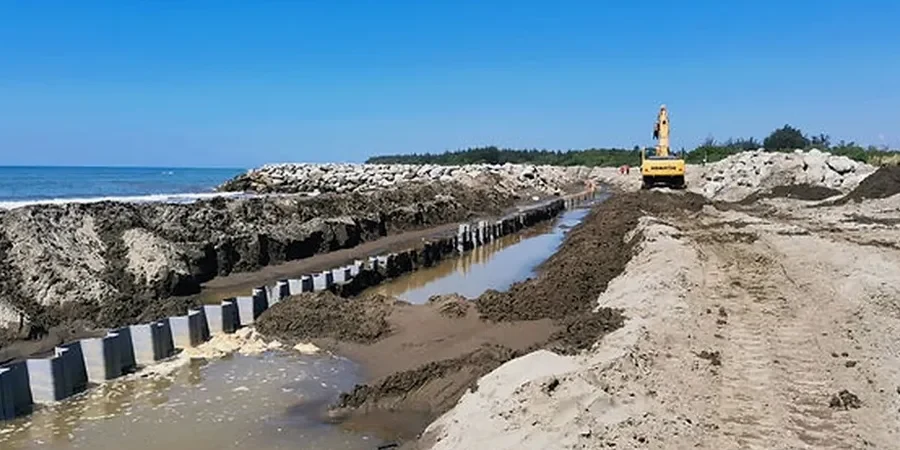
In Boise's high-water-table zones, sheet pile wall design must account for both soil retention and hydrostatic pressure — two forces that often compete.
Method and coverage
- Soil cohesion and friction angle (triaxial CU tests)
- Groundwater level fluctuations between seasons
- Corrosion potential based on resistivity and pH
- Surcharge loads from adjacent streets or structures
Regional considerations
The Treasure Valley's seasonal hydrology — snowmelt in spring and irrigation pulses in summer — can raise the water table by 4 to 6 feet within weeks. For sheet pile wall design in Boise, this rapid fluctuation creates a hidden risk: if the wall is designed for dry-season conditions, the passive pressure zone can become fully submerged, reducing effective stress and threatening toe stability. Additionally, the loose, saturated sands around the Boise River are prone to liquefaction during a seismic event. Our designs incorporate a post-earthquake stability check using residual undrained strengths, ensuring the wall holds even after strong shaking.
Standards that apply
ASCE 7-22 (Minimum Design Loads and Associated Criteria), USS Steel Sheet Piling Design Manual (2015), ASTM A572/A572M Grade 50 (structural steel), FHWA-NHI-14-007 (Earth Retaining Structures)
Related services
Permanent Sheet Pile Walls
For basement walls, bridge abutments, and levees along the Boise River. We design for a 50-year service life, including corrosion protection by coating or increased section thickness, and full hydrostatic relief via weep holes or drainage blankets.
Temporary Sheet Pile Shoring
For deep excavations in downtown Boise or on the Bench, where adjacent buildings demand zero lateral movement. We specify anchored or braced systems, model wall deflection under sequential excavation, and monitor during construction to verify performance.
Typical parameters
Top questions
How deep do sheet piles need to be driven in Boise's soil?
Depths typically range from 8 to 25 feet depending on retained height, soil density, and groundwater conditions. In the sandy deposits near the Boise River, we often need deeper embedment to mobilize enough passive resistance. Our design checks toe stability for both static and seismic cases.
What corrosion rate should I expect for sheet piles in Boise's environment?
In the neutral to slightly alkaline soils of the Treasure Valley, corrosion rates are moderate — typically 0.003 to 0.006 inches per year on the exposed face. We recommend a 1/16-inch corrosion allowance for permanent walls. In aggressive zones with low resistivity, we add coating or increase thickness.
Can sheet pile walls be used for waterfront projects along the Boise River?
Absolutely. Sheet pile walls are a standard solution for riverbank stabilization and levee reinforcement. However, the design must account for scour depth during flood events and the potential for ice loading in winter. We follow USACE guidance to ensure long-term performance.
What is the typical cost range for sheet pile wall design in Boise?
Design fees generally range from US$1,340 to US$4,620 depending on the wall length, complexity of soil stratigraphy, and whether seismic analysis is required. This includes field investigation, numerical modeling, and a stamped engineering report compliant with IBC 2021.