Boise sits on deep alluvial sediments of the Snake River Plain, which can amplify seismic waves during an earthquake. The city's proximity to the Intermountain Seismic Belt means moderate to strong ground motion is a real possibility. For any new structure in Boise Idaho, seismic foundation design must account for site-specific soil behavior under cyclic loading. We do that through field testing and advanced lab work, following ASCE 7-16 for site class determination and NEHRP provisions. A common first step is a [MASW survey](/masw-vs30/) to measure shear-wave velocity and classify the soil profile without drilling.
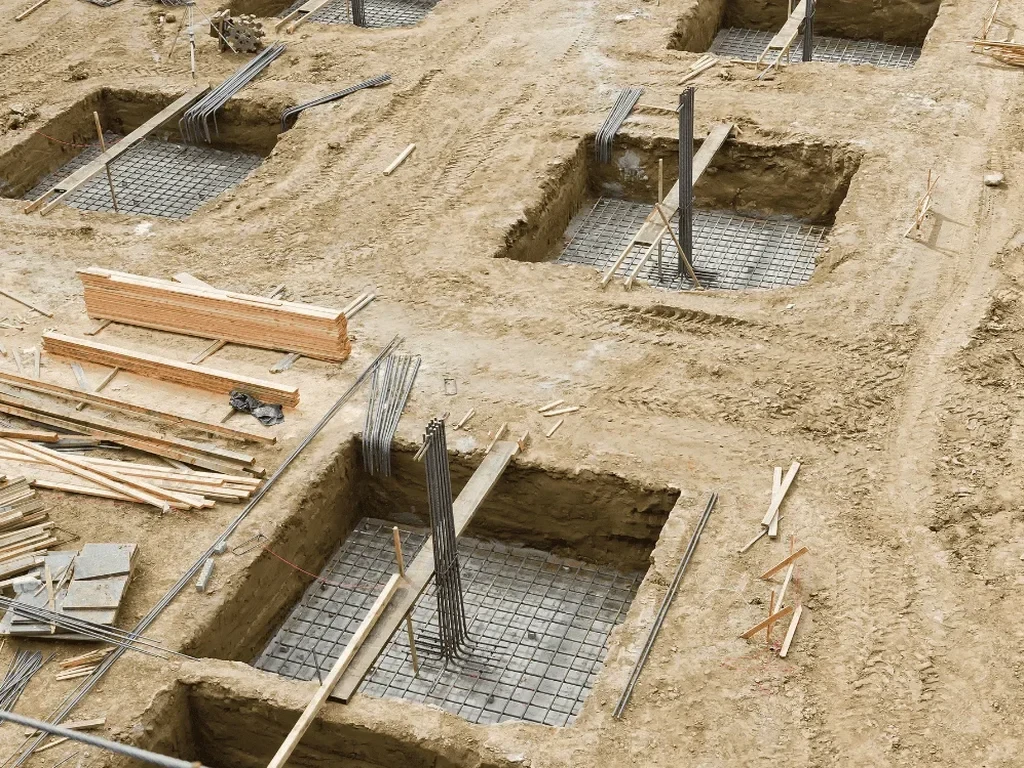
Boise's alluvial basin can amplify peak ground acceleration by up to 50% compared to bedrock — seismic foundation design must account for this site effect.
Method and coverage
- Site class per ASCE 7 (A through F)
- Liquefaction evaluation using Youd-Idriss (2001) criteria
- Cyclic triaxial testing on undisturbed samples
Regional considerations
Boise expanded rapidly after the 1980s, pushing developments into areas with soft alluvial deposits and high groundwater. Many subdivisions in the western valley sit on sediments prone to liquefaction during a design-level earthquake. The 2020 Stanley earthquake (M6.5) reminded engineers that ground motion reaches the Treasure Valley with enough energy to trigger settlement. For existing structures, seismic foundation design must also consider foundation retrofit options like deep soil mixing or micropiles to improve lateral capacity without demolishing the building.
Standards that apply
ASCE 7-16 (Minimum Design Loads for Buildings), IBC 2021 (International Building Code), ASTM D1586-18 (Standard Test Method for SPT), NEHRP Recommended Seismic Provisions (2020)
Related services
Site-Specific Response Spectrum
Develop a site-specific acceleration response spectrum based on Vs30 and soil column modeling per ASCE 7. Includes SHAKE or DEEPSOIL analysis.
Liquefaction Hazard Assessment
Evaluate liquefaction triggering and post-liquefaction settlement using SPT and CPT data. We follow the NCEER (Youd-Idriss) methodology.
Foundation Performance Analysis
Calculate bearing capacity and settlement under seismic loads. We check sliding, overturning, and cyclic degradation using lab test results.
Typical parameters
Top questions
What is the difference between site class C and D for seismic design in Boise?
Site class C (very dense soil) has Vs30 of 360–760 m/s and generally lower amplification. Site class D (stiff soil) has Vs30 of 180–360 m/s and amplifies longer-period ground motions. Many Boise valley sites fall into class D, requiring a higher design response spectrum.
Does Boise have a known liquefaction hazard?
Yes. Parts of the Boise River floodplain and areas with shallow groundwater (depth < 6 m) have moderate to high liquefaction susceptibility. Our assessment uses SPT blow counts, grain size, and cyclic stress ratio to compute factor of safety.
How much does seismic foundation design cost for a typical Boise project?
For a single-family home or small commercial building, expect between US$1.310 and US$4.570 depending on the number of borings, lab tests, and analysis complexity. Larger structures require more investigation.