The Treasure Valley sits on a mix of alluvial silts, sands, and gravels deposited by the Boise River, with groundwater often sitting 10 to 30 feet deep depending on the season. These layers shift in density and gradation over short distances, which makes pavement design in Boise Idaho a task that demands site-specific data rather than default assumptions. For any new subdivision access road or arterial project, the first step is characterizing the subgrade through basic index properties and compaction tests. A standard Proctor test determines the optimum moisture content and maximum dry density for fill placement, while a CBR test gives the bearing ratio used to dimension the pavement structure. Without these values, the risk of premature cracking or rutting climbs fast.
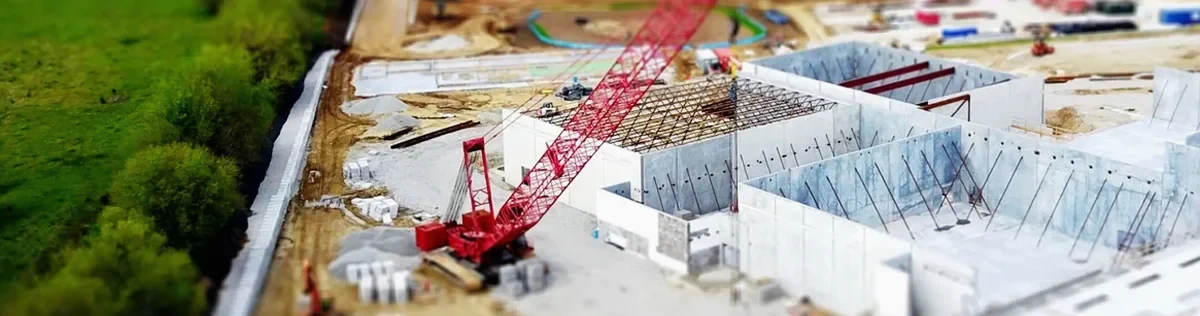
In Boise Idaho, the native silts often fall into AASHTO A-4 or A-6 groups, demanding careful moisture control and stabilization before pavement placement.
Method and coverage
Regional considerations
In Boise Idaho, many issues stem from building pavement on silty subgrades during the wet spring season. The moisture content at compaction can be 3 to 5 points above optimum, leading to low density and long-term consolidation under traffic. Frost action in the top two feet lifts the pavement surface unevenly, and when the thaw comes, the subgrade loses all support. A proper road geotechnics study identifies these zones early and specifies stabilization with lime or cement, or recommends undercutting and replacement with select granular fill. Skipping this step often forces expensive mill-and-overlay repairs within the first five years.
Standards that apply
ASTM D698 (Standard Proctor), ASTM D1883 (CBR in laboratory), AASHTO M 145 (Classification of Soils for Highway Subgrades), AASHTO R 50 (Geotechnical Investigation for Pavement Design)
Related services
Subgrade Characterization & Compaction Control
Standard and modified Proctor tests, in-situ density by sand cone or nuclear gauge, and moisture content verification. We classify the soil per AASHTO and USCS systems and provide the compaction curves needed for quality control on site.
CBR & Resilient Modulus Testing
Soaked and unsoaked CBR tests at multiple energy levels, plus resilient modulus estimation from CBR correlations or direct repeated load triaxial testing (AASHTO T 307). These parameters drive the structural number in flexible pavement design.
Typical parameters
Top questions
How many test pits or borings are needed for a typical residential street project in Boise Idaho?
For a standard 600-meter residential street, we recommend one boring every 150 to 200 meters, with at least one per distinct soil unit. In Boise Idaho, where alluvial deposits vary laterally, extra borings near intersections or known fill areas improve the reliability of the subgrade modulus.
What is the difference between CBR and Resilient Modulus in pavement design?
CBR is an empirical index that measures the bearing capacity of a soaked soil sample under static load. Resilient Modulus (Mr) simulates the elastic behavior of the subgrade under repeated traffic loading and is the primary input for mechanistic-empirical design methods like AASHTOWare. Mr can be estimated from CBR using the formula Mr (psi) = 1500 x CBR for fine-grained soils, but direct testing is more accurate.
How much does a full road geotechnics study cost in Boise Idaho?
A complete study covering field borings, laboratory testing (Proctor, CBR, Atterberg limits, gradation), and a design report typically ranges between US$740 and US$4,070 depending on the number of test points and the complexity of the soil profile. The final price depends on project scope and access conditions.