The difference between building on the sandy gravels near the Boise River and the expansive clay deposits found around the Foothills is night and day. Downtown projects on the river terrace typically encounter clean sands with good drainage, while developments in the Bench area or westward toward Eagle often hit high-plasticity clays that swell when wet and shrink during our dry summers. That is where lime and cement stabilization becomes a practical solution. By treating the upper 12 to 24 inches of subgrade with either quicklime or Portland cement, we chemically modify the clay minerals to reduce plasticity index, increase California Bearing Ratio, and create a stable working platform. Before specifying the dosage, we always run Atterberg limits and a compaction test to fine-tune the mix design for the specific soil in Boise Idaho.
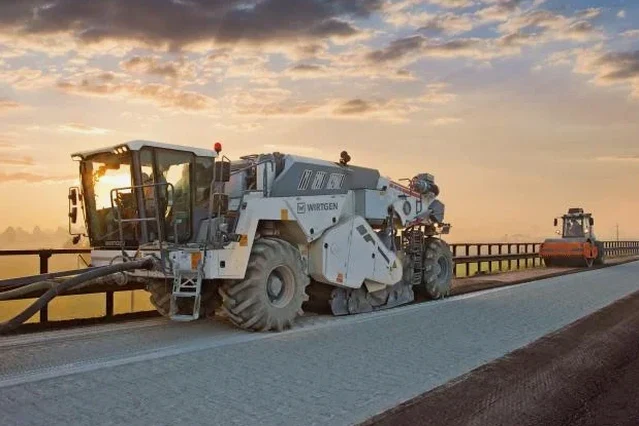
Treating expansive clays with lime can reduce the plasticity index from 45 to below 15, transforming a problematic subgrade into reliable engineered fill.
Method and coverage
Regional considerations
The semi-arid climate of Boise Idaho brings hot, dry summers and cold, wet winters. That seasonal moisture swing is exactly what triggers volume change in untreated expansive clays. If stabilization is performed too late in the fall, the chemical reactions may not complete before the ground freezes, leaving the treated layer vulnerable to frost heave. Conversely, applying lime during a dry July without adequate moisture control can result in incomplete hydration and a dusty, low-strength product. We always monitor water content during mixing to stay within 2 percent of optimum, and we protect the finished grade with a proof roll and moisture barrier if rain is forecast. For deep stabilization near the water table, combining cement treatment with vertical drains helps dissipate pore pressure and accelerates strength gain.
Standards that apply
ASTM D6276-19 (Standard Test Method for Using pH to Estimate the Soil-Lime Proportion Requirement), ASTM D1633-17 (Standard Test Methods for Compressive Strength of Molded Soil-Cement Cylinders), ASTM D4318-17 (Standard Test Methods for Liquid Limit, Plastic Limit, and Plasticity Index of Soils), IBC 2021 Section 1804 (Excavation, Grading, and Fill)
Related services
Lime Modification and Stabilization
Application of quicklime or hydrated lime to reduce plasticity index and improve workability of high-plasticity clays. Includes pH testing per ASTM D6276 to determine the optimum lime percentage, followed by mixing, mellowing, and re-compaction.
Cement Stabilization for Structural Fill
Portland cement mixed at 4–10 percent by dry weight to achieve 100–300 psi unconfined compressive strength after 7 days. Suitable for building pads, parking lots, and roadway subgrades in Boise Idaho.
Combined Lime-Cement Treatment
Sequential application of lime followed by cement for soils with very high plasticity or organic content. The lime pre-treatment reduces clay activity, allowing the cement to bond more effectively and reach target strength faster.
This service complements our laboratory testing work for a complete project analysis.
Typical parameters
Top questions
How does lime stabilization compare to cement stabilization for Boise clays?
Lime is generally preferred for highly plastic clays (PI > 30) because it chemically reduces the soil's affinity for water through cation exchange and flocculation. Cement works better for silty sands and low-plasticity soils where the goal is rapid strength gain. For Boise Idaho projects, we often run both Atterberg limits and unconfined compression tests to decide which binder is more cost-effective.
What is the typical cost for lime or cement stabilization in Boise Idaho?
For a standard 12-inch treatment depth, stabilization costs typically range between $820 and $2,880 depending on the binder type, dosage rate, and total volume. Cement tends to be slightly cheaper per ton than lime, but lime may require less material for high-plasticity soils. A site-specific mix design is always recommended to avoid over-application.
How long does it take for lime-stabilized soil to reach design strength?
After mixing and compaction, lime-treated soil needs a mellowing period of 24 to 72 hours, followed by a 7-day curing period to reach about 70 percent of its ultimate strength. Full strength develops over 28 days. Cement-treated soils gain strength faster, often reaching 80 percent of design strength within 7 days. Cold weather in Boise Idaho can slow both reactions, so we adjust the mix design and protect the surface with curing compound when temperatures drop below 40°F.